Sat, 15th – Sun, 30th Aug
The Stables, Causeway Cromarty IV11 8XS

Sat, 15th – Sun, 30th Aug
Open Exhibition of work. Free entry.
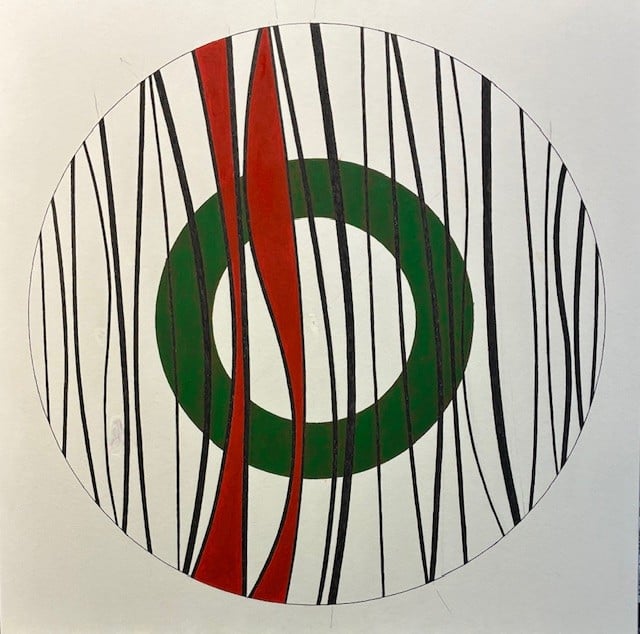
The Dunn family moved from the west coast to Cromarty in 1966. At that time the small town was picturesque but run-down and dilapidated. Half of the houses in Fishertown, the oldest part of Cromarty, were empty and in dire need of repair and modernisation. Some of the largest and grandest houses in town, such as Forsyth House and St Anne’s, were the homes of single people, on their own in these huge spaces, and Belleview had been empty for many years.
The main employments in and around the town seemed to be farming or working for the Forestry Commission. Alison Dunn continued with the pottery which she had started in Aultbea, and Alastair, who had been a baker, went to Gray’s Art School as a mature student to train to be an art teacher. Apart from the pottery shop there was one other craft shop in town but visitors were scarce except in the summer, and only if the weather was good, when the beaches at Shore Street and the links would be crowded; but for most of the year the town was dead. If Cromarty had been in a western dust would have been blowing through the streets and the gutters would have been choked with tumbleweed.
Then in 1972 things changed, when construction started on the rig-building yard across the firth at Nigg. The project did not meet with universal welcome but the momentum was irresistible, and over the next few years the changes to Cromarty were irrevocable. Most of the skilled labour for the yard came from the declining shipyards on the Clyde, and many of these workers lived on two old liners moored to Nigg pier; but there were also openings for local boys and men, to be trained as welders or electricians, who if these jobs had not been available would have left the town for good. There was a ferry running from Cromarty to Nigg twice a day, taking dozens of workers back and forth. Some of the empty houses of Fishertown attracted middle-managers of the yard, who had the money to renovate and improve sympathetically; and as the local economy gradually improved the town also became desirable as a place to retire to. For example, amongst the new settlers were Sandy Hardie, a retired professor of engineering, and Charles Bannerman, who had worked for a London advertising company and had been part of the ‘Snap, Crackle and Pop’ campaign for Kellogg’s Rice Crispies. (Both Sandy and Charles had been born and educated in Aberdeen.)
And so, as Cromarty awakened from the long years of depression the time seemed ripe for the establishment of an arts group. The founding members were Sandy Hardie, Charles Bannerman, Alastair and Alison Dunn, Bill Wylie, Mike Taylor and Alex Dunn. There was mild disagreement over the name – the suggestion of ‘All Creatives Great and Small’ was rejected with amused disdain – before ‘The Cromarty Group’ was settled on. From the first exhibition in 1976, held in the function room of The Royal Hotel at the harbour, the annual shows were a notable social and commercial success; it felt as though the half the town was crushed into the room on the opening nights. Alison’s and Mike’s miniature paintings were usually sold-out on the first evening, and customers were known to almost come to blows in the stampede to buy one of Sandy’s or Charles’ local landscapes; there was always a long queue at the desk many minutes before the official opening. One customer was overheard to say that her ambition was to eventually buy one example of each of the members’ pictures.
For several years the exhibition was held in The Royal Hotel, then in The Byre next door, then back to The Royal, before settling in The Stables. This old building (reputedly designed by one of the Adam brothers) had been rescued in the nineties from a derelict state and renovated as an exhibition, concert and event space. Owned by John Nightingale of Cromarty House it is managed by the Cromarty Arts Trust, and it is one of the best exhibition spaces in the Highlands.
Meanwhile over the years some members fell away – Sandy and Charles both died, and then Alison and Alastair – while there were new members: in 1982 Simon and Jenny Gunn joined, then later Zooulla Spirou, Leon Patchett, Caroline Hewat, Barbel Dister, Pat Hay, Ian Barr and Fiona Feilberg. Recently recruited were the painter Jill Meredith and the potters Elisa de Waal and Lexie Macleod. And for the last ten years the Group has always had two or three invited-artists to take part in the annual exhibition.
It took a long time but Cromarty is now definitely a destination, both for Highlanders and for tourists from far afield. It is considered to be architecturally one of the best-preserved small towns in Scotland. And while for many years the annual Cromarty Group exhibitions stood alone, except for the occasional local art show held in the Victoria Hall, there are now regular exhibitions by Black Isle Collective, the Redcastle Group, and in 2025 ‘In Cahoots’, an exhibition by young women artists, as well as shows by individual artists. Such exhibitions, along with concerts, workshops or lectures, held in either The Stables or The Old Brewery, are an excellent development, marking Cromarty out as an artistic hub; but with some pride the Cromarty Group members can say, ‘We did it first!’
| Ticket Type | Tickets left | Price | Cart |
|---|---|---|---|
| CROMARTY GROUP 50th ANNUAL EXHIBITION | 49 | £0.00 |
Sign up for news and upcoming workshops and music events.
You can unsubscribe any time. View our Privacy Policy for more details.